
Pavers and stone
Joints and textured surfaces trap grime and organic growth, which is what makes pavers look dull.
Patios take the most direct use of any outdoor surface, food and drink spills, planter rings, furniture marks, barbecue residue, and shaded areas that stay damp longer than the rest of the yard.
Patio cleaning covers pavers, natural stone, outdoor tile, and concrete patio slabs, along with the steps and walkways that connect them.
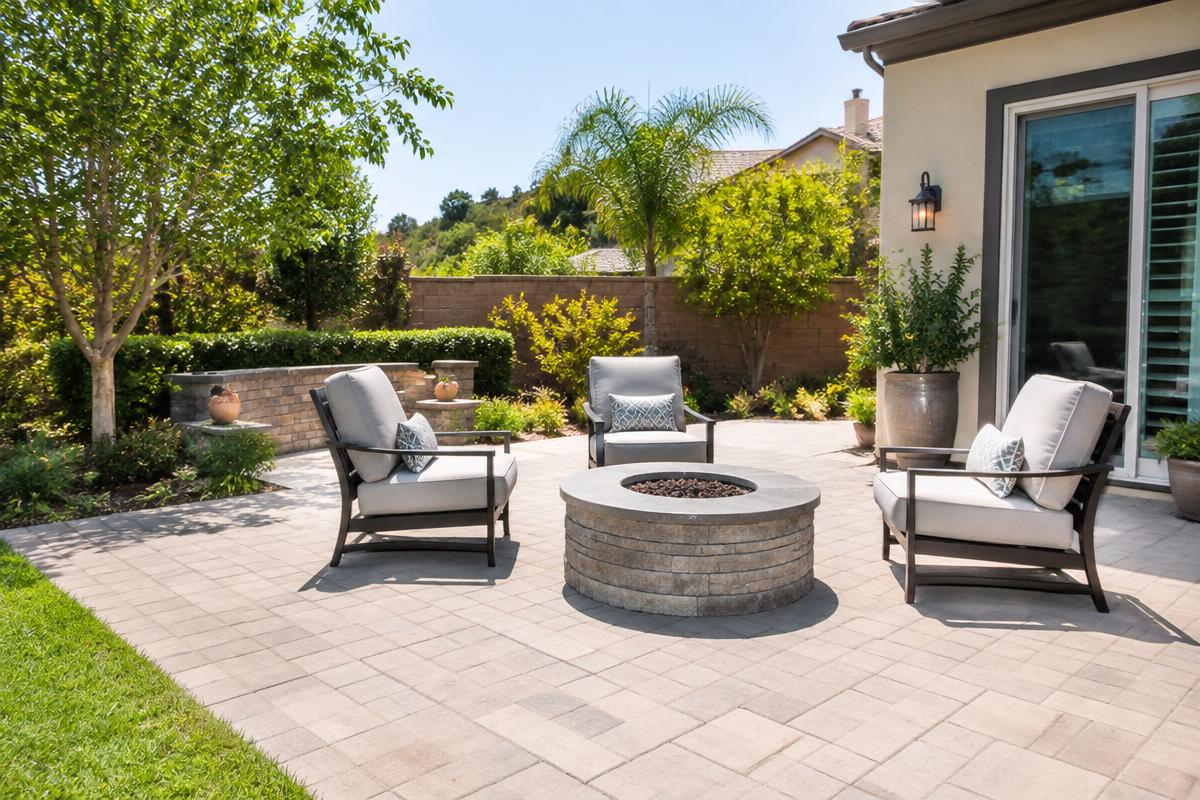
Joints and textured surfaces trap grime and organic growth, which is what makes pavers look dull.
Tiled patios and the transitions to decks or thresholds need a gentler touch than open concrete.
The details around a patio, steps, low walls, and cooking areas, are where residue is most visible.
Every property is different, so pricing is quoted per job after we understand the scope.
Yes. Pavers have joints and a surface profile that behave differently from a poured slab, so the approach is adjusted for the material rather than using one setting for everything.
It can, especially in shaded or damp areas. Cleaning clears what is there now; how quickly it returns depends on sun exposure, irrigation, and drainage.
Often it improves noticeably, but grease that soaked into porous stone or concrete may not disappear entirely. Send a photo with your request for a realistic read.
It helps if the area is clear. If items are heavy or awkward, tell us in advance so we can plan the work around them.
Yes, and it usually makes sense to. Many customers pair patio cleaning with concrete cleaning, house washing, or turf cleaning in a single visit.
Most patios are a same day job, but the time depends on size, material, condition, and how much needs to be moved.
Tell us about the property and what needs cleaning. We will review your request and follow up with the next step.
Call (951) 489-3905